You already know how much the paint costs. You’ve looked at the exterior painting cost online and figured it’s manageable. But the real comparison between a professional painter vs DIY runs a lot deeper than what’s sitting on the shelf at the hardware store. The numbers tell a more complicated story, and this post breaks it down so you can make a decision you won’t regret two years from now.
Key Takeaways:
What Your Home’s Exterior Actually Needs Before Paint Touches It
Paint is the most visible part of this project. It’s also the last thing that goes on.
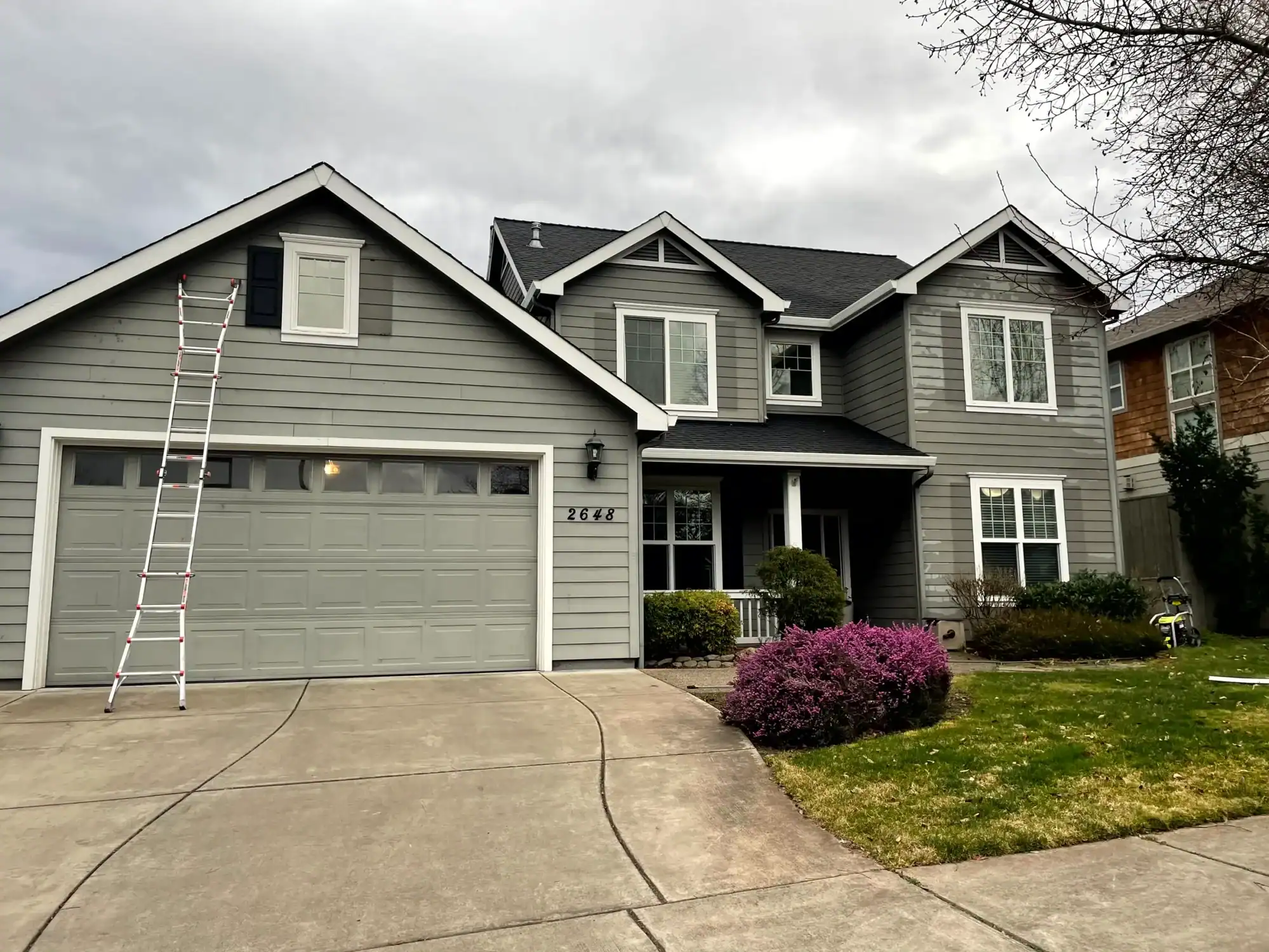
Before a single drop of color touches your siding, there’s a long list of steps that determine whether your job holds up for 3 years or 10. Pressure washing. Scraping loose and peeling paint. Sanding rough spots. Caulking gaps around windows and trim. Patching cracks. Priming bare surfaces.
These aren’t optional extras. They’re the foundation the finish sits on. Skip them or rush them, and the results will show it, usually sooner than expected.
That’s the part of the professional painter vs DIY equation that’s easy to miss when you’re standing in the paint aisle with a cart full of supplies and a weekend blocked off on your calendar.
Breaking Down Exterior Painting Cost: DIY vs. Professional
Let’s get into what each path actually costs.
The DIY side of exterior painting cost: For a home between 1,500 and 2,000 square feet, expect to spend between $500 and $2,400 on materials. That covers paint, primer, caulk, painter’s tape, drop cloths, brushes, rollers, and a ladder. Quality exterior paint runs $50 to $100 per gallon. A home that size typically needs 10 to 15 gallons. Add it up and materials alone can reach $1,000 or more before you pick up a single brush.
The professional side of exterior painting cost: According to HomeAdvisor, the average cost to paint a home’s exterior in the U.S. is around $3,177. Larger homes or those with significant prep needs can push that number above $5,000.
On paper, DIY saves money. But that comparison only holds if both options deliver the same result and last the same amount of time. They often don’t.
A poorly prepped DIY paint job can start peeling in 3 years. That means buying materials again, spending weeks redoing it, or paying a contractor to fix what went wrong. The upfront savings shrink fast when you factor in the redo.
The Professional Painter vs DIY Prep Work Reality
This is where most DIY exterior projects fall short.
According to painting industry professionals, exterior paint prep accounts for 70 percent or more of a paint job’s total lifespan. Not the brand on the can. Not the number of coats. The prep.
Power washing, scraping, sanding, caulking, and priming are all part of thorough exterior paint prep. Most homeowners skip or rush these steps, not because they don’t care, but because they’re genuinely exhausting. A full day of scraping and caulking is a lot to give up on a weekend.
But cutting that phase short is the number-one cause of early paint failure. Professionals who work with coatings manufacturers consistently report that the overwhelming majority of paint failures trace back to inadequate exterior paint prep. Not bad paint. Not wrong technique. Prep that got rushed.
A trained crew knows what to look for before the first coat goes on: wood rot, moisture damage, failing caulk, and chalking paint. That knowledge changes what the job looks like 5 years later.
Skipping exterior paint prep doesn’t save time. It just moves the cost to a later date, usually with more damage to fix when it arrives.
Paint Quality: What’s on the Shelf vs. What Contractors Use
Here’s something most homeowners don’t know: the paint on the shelf at your local hardware store and the paint a contractor applies aren’t always the same product.
Professional exterior painting contractors often have access to contractor-grade formulas that perform better under real-world conditions. They carry trade accounts with discounts of 20 to 40 percent off retail. On a large job, that’s a real dollar difference, and the paint they’re buying may still outperform the retail version at full price.
Paint quality matters because not all formulas are built the same way. Premium 100% acrylic latex exterior paints contain stronger resins and pigments that resist UV damage and moisture better than budget options. A lower-grade paint may look fine on day one, but paint quality differences become clear at the 3 to 5 year mark, when one finish is still holding and another is chalking.
How paint gets applied matters just as much as paint quality. Professional crews use airless sprayers for speed and even coverage, then back-roll immediately after to push the paint deeper into surfaces. That technique produces better adhesion than a brush and roller alone. Better adhesion adds years to the finish.
Poor paint quality combined with rushed exterior paint prep is a combination that shortens a paint job’s life faster than most homeowners expect.
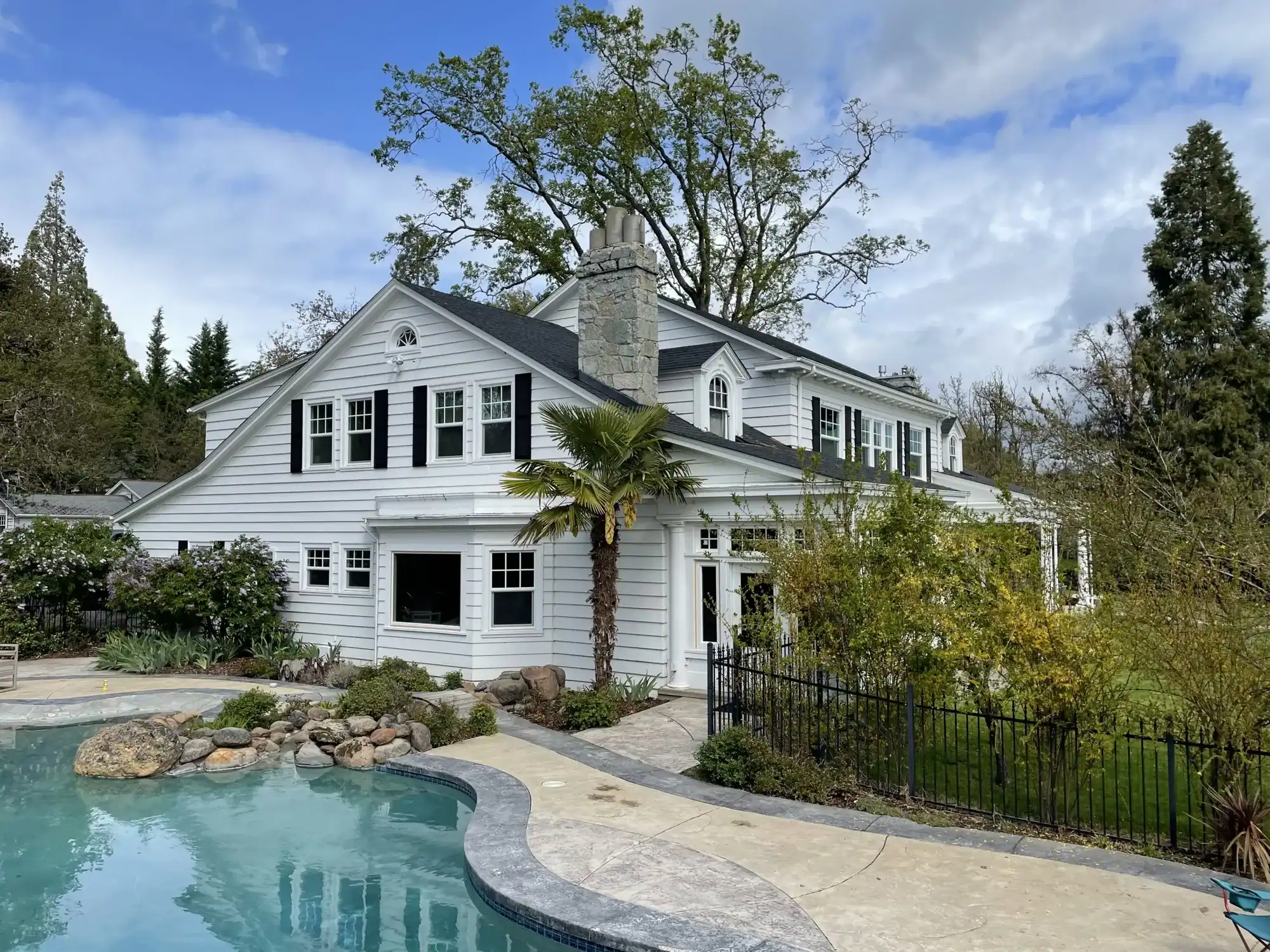
The Time Math Nobody Factors Into Exterior Painting Cost
Most homeowners calculate exterior painting cost in dollars. Fewer calculate it in hours.
A professional crew can paint the exterior of an average home in 3 to 5 days. A DIY project on that same home, spread across weekends, can take 3 to 6 weeks. That estimate doesn’t include weather delays, drying time between coats, or time spent fixing mistakes along the way.
Time has a dollar value. If your time is worth $30 an hour and you spend 80 hours on a DIY paint job that a professional painter vs DIY comparison would show a crew finishing in 4 days, the gap in total cost gets narrower in a hurry.
There’s also the safety side. Working from ladders at height is among the most common causes of serious home improvement injuries. Multi-story homes raise that risk considerably. A licensed contractor carries liability insurance and workers’ compensation coverage. A homeowner doing the work themselves has neither of those protections in place.
That’s not a reason to avoid DIY in every situation. It’s just the complete picture of what’s actually involved.
When Hiring a Professional Exterior Painting Contractor Makes More Sense
Not every home needs professional help. Let’s be direct about that.
Single-story homes with minimal prep needs, homeowners with some painting experience, and straightforward surfaces can be reasonable DIY candidates. If you’re patient with exterior paint prep, comfortable on a ladder, and willing to invest in paint quality, the results can hold up.
But there are situations where calling a professional exterior painting contractor is the more practical call:
In those situations, the professional painter vs DIY math changes. A job done right by a professional exterior painting contractor often costs less over time than a DIY job that needs redoing in a few years.
What to Ask Before You Hire an Exterior Painting Contractor
If you decide to hire, who you work with matters as much as the decision itself.
Get a written estimate that breaks out the exterior paint prep work specifically. What is included? Power washing? Scraping? Caulking? Primer coats? A vague quote is worth asking about before you move forward. A low bid that leaves out prep details is worth a second look.
Ask whether the contractor carries liability insurance and workers’ compensation. Any reputable exterior painting contractor will provide that documentation without hesitation.
Ask about paint quality directly. What brand and product line do they plan to use? A contractor who can answer specifically, and explain why that product suits your surface and your local climate, knows the work at a level that goes beyond showing up with a sprayer.
Ask for references or examples of completed exterior projects in your area. Solid paint quality and thorough exterior paint prep show up clearly in work that has been standing for a few years.
Let’s Talk About What Your Home Actually Needs
You don’t have to make a call today. But if your exterior is showing signs of wear, getting a professional estimate costs nothing and gives you real exterior painting cost numbers to work with.
All American Trade Work works with homeowners who want a clear and honest answer to the professional painter vs DIY question. What does a quality exterior paint job actually cost? How long will it hold up? What goes into the price?
Call 541-697-3141 and get a straight answer, no pressure.