Paint ceiling or walls first? If both surfaces are part of the project, start with the ceiling. Working from the top down makes it easier to deal with roller spatter and small overlaps before the walls receive their finish coats.
For a Central Point interior, the full sequence still depends on the scope, wall and trim condition, colors, and the products being used. Ceiling first is the reliable starting point, then the remaining order can be adjusted around the room.
Why the Ceiling Usually Comes First
Ceiling work happens above every other painted surface in the room. Roller spatter and small drips can land on nearby walls, so finishing the ceiling first gives you a chance to cover those marks when the walls are painted afterward.
Benjamin Moore recommends painting the ceiling before the walls when both are part of the project. It also recommends protecting everything below the ceiling with drop cloths.
That sequence also makes the ceiling-to-wall edge easier to manage because a small amount of ceiling coating can overlap onto the wall and be covered during the wall stage.
Prep the Room Before You Decide the Final Sequence
Painting order does not replace surface preparation. Clean the surfaces, repair damaged drywall, sand repairs smooth, and use primer where the surface or coating system calls for it.
Move or cover furniture, protect the floors, and remove switch plates and outlet covers before painting begins. Ceiling fixtures should also be removed or protected from spatter.
If the room has water stains, peeling coating, loose texture, or drywall damage, those issues should be addressed before finish paint is applied.
How to Paint the Ceiling Before the Walls
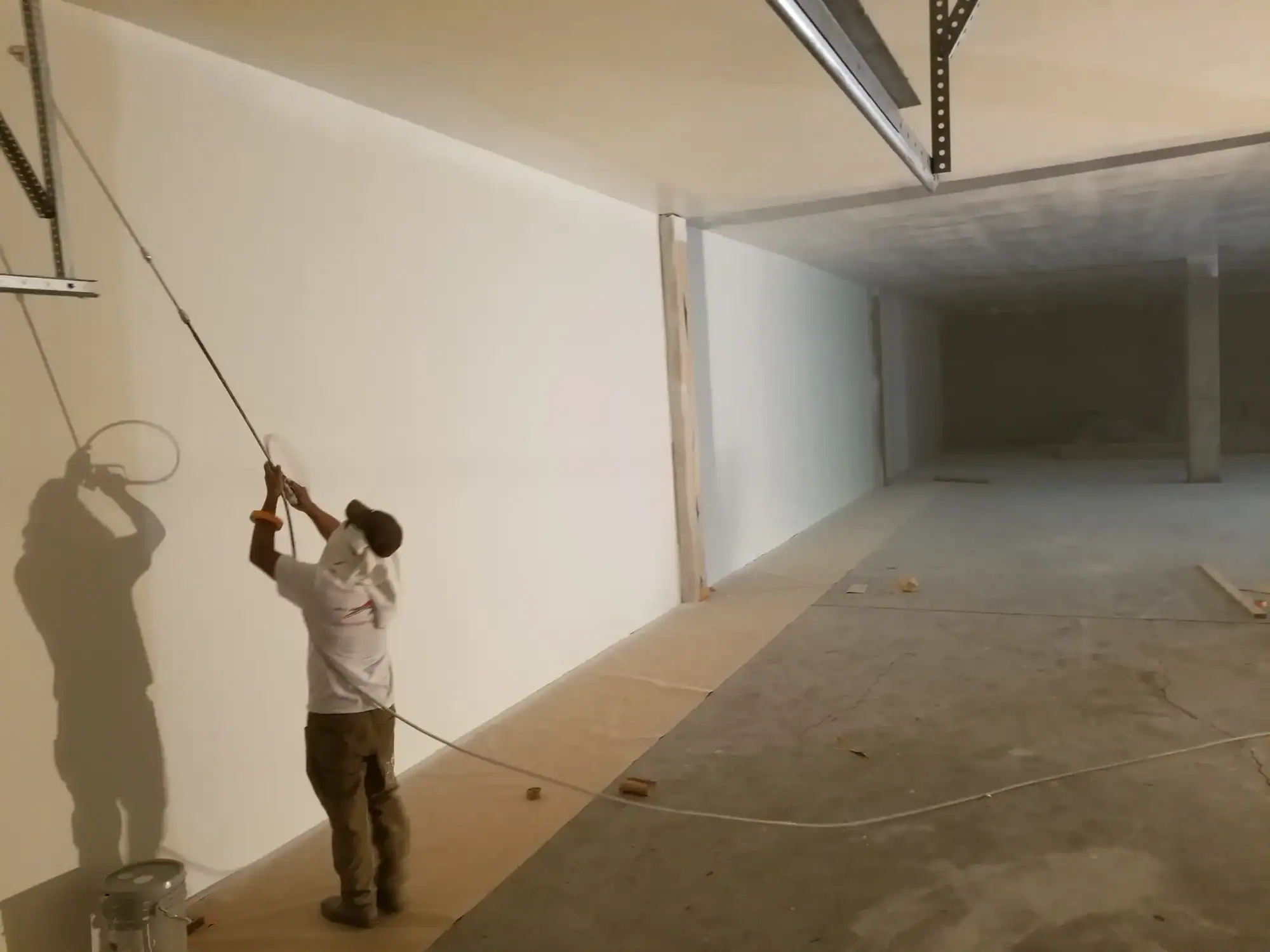
Start by cutting in the ceiling perimeter where it meets the walls, then roll the larger ceiling area. If the walls will also be painted, a small amount of ceiling coating can extend onto the upper wall because that overlap will be covered later.
Work steadily enough to keep the ceiling finish consistent, and follow the product label for drying and recoating. Do not assume every ceiling needs the same number of coats.
If the walls are staying as they are, protect the wall edge and use a clean cut line instead of intentionally overlapping onto the wall.
Should Trim Come Before or After the Walls?
There is more than one workable sequence for trim and walls. Some painters finish the trim first so it can be masked before the walls are rolled, while others paint the walls first and cut the trim in afterward.
The better choice depends on the products, color contrast, surface condition, drying time, and the painter’s preferred masking or cutting method.
The important part is that each finished surface is protected before the next step begins. If tape is used on a freshly painted surface, follow the coating and tape manufacturer’s guidance before masking it.
Ceiling Paint and Wall Paint Should Match the Surface
Painting order and paint selection are separate decisions. A ceiling coating may be selected for low glare or overhead application, while wall paint is usually chosen around appearance, cleaning, and daily contact.
All American Trade Work currently uses Sherwin-Williams Duration Interior for walls and ceilings in Central Point homes and Emerald Trim Urethane for trim and doors. Sheen selection is discussed during the estimate based on how the room is used.
For more about those coating choices, see our interior house painting services.
When the Standard Order Can Change
If only the walls are being painted, there is no reason to repaint a ceiling that is already in good condition. Protect the ceiling edge and focus the work on the wall surfaces.
If only the ceiling is changing, protect the finished walls carefully before cutting and rolling overhead. Accent walls can usually be painted after the surrounding walls so their edges can be cut cleanly against the finished room.
Repairs can also affect the sequence. Drywall work, ceiling texture repair, carpentry, or stain treatment should be completed before the final finish coats are applied.
What Goes Wrong When Walls Are Finished Too Early
Painting the walls first is not automatically a failed project, but it can create extra protection and touch-up work if the ceiling still needs to be rolled afterward.
Ceiling spatter can land on finished walls, and a roller or brush can accidentally touch the upper wall edge. Correcting those marks later means matching the wall color, sheen, and texture again.
If a wall touch-up remains visible, repainting the full wall to a natural break may give a cleaner result. Our guide to touching up wall paint explains when a localized repair is likely to blend.
How All American Trade Work Handles Interior Repaints in Central Point
At All American Trade Work, interior projects include wall and ceiling painting, trim and door painting, drywall repair, wallpaper removal, popcorn ceiling removal, indoor staining, and related preparation.
Our current Central Point page confirms free estimates, licensed and insured service, a dedicated project manager, daily communication, furniture and floor protection, a final walkthrough, and a 1-year warranty on labor and materials.
We use Sherwin-Williams Duration Interior on walls and ceilings and Emerald Trim Urethane on trim, doors, and built-ins. Products are named in the proposal before the work begins.
Frequently Asked Questions
Should you paint the ceiling or walls first?
Paint the ceiling first when both surfaces are being painted. That makes it easier to cover minor ceiling spatter or overlap when you move on to the walls.
Should trim be painted before or after walls?
Both sequences can work. The choice depends on the products, colors, masking method, drying time, and how the painter prefers to cut clean edges.
Do you have to repaint the ceiling when painting the walls?
No. If the ceiling is in good condition and the scope only includes walls, protect the ceiling edge and leave it in place.
Do ceilings and walls need the same paint?
Not necessarily. The coating and sheen should be chosen for the surface, room use, cleaning needs, and appearance you want. Follow the manufacturer’s approved uses for the exact product.