A low exterior painting bid can feel like a smart win until the new coating starts lifting around trim or flaking from siding. Skipping exterior paint prep causes problems because paint can only bond to the surface beneath it.
For homeowners comparing estimates in Medford and nearby Rogue Valley communities, the difference between bids often comes down to the work completed before the first finish coat. This guide explains which prep steps matter, what early failure looks like, and what to ask before approving a project.
Key Takeaways:
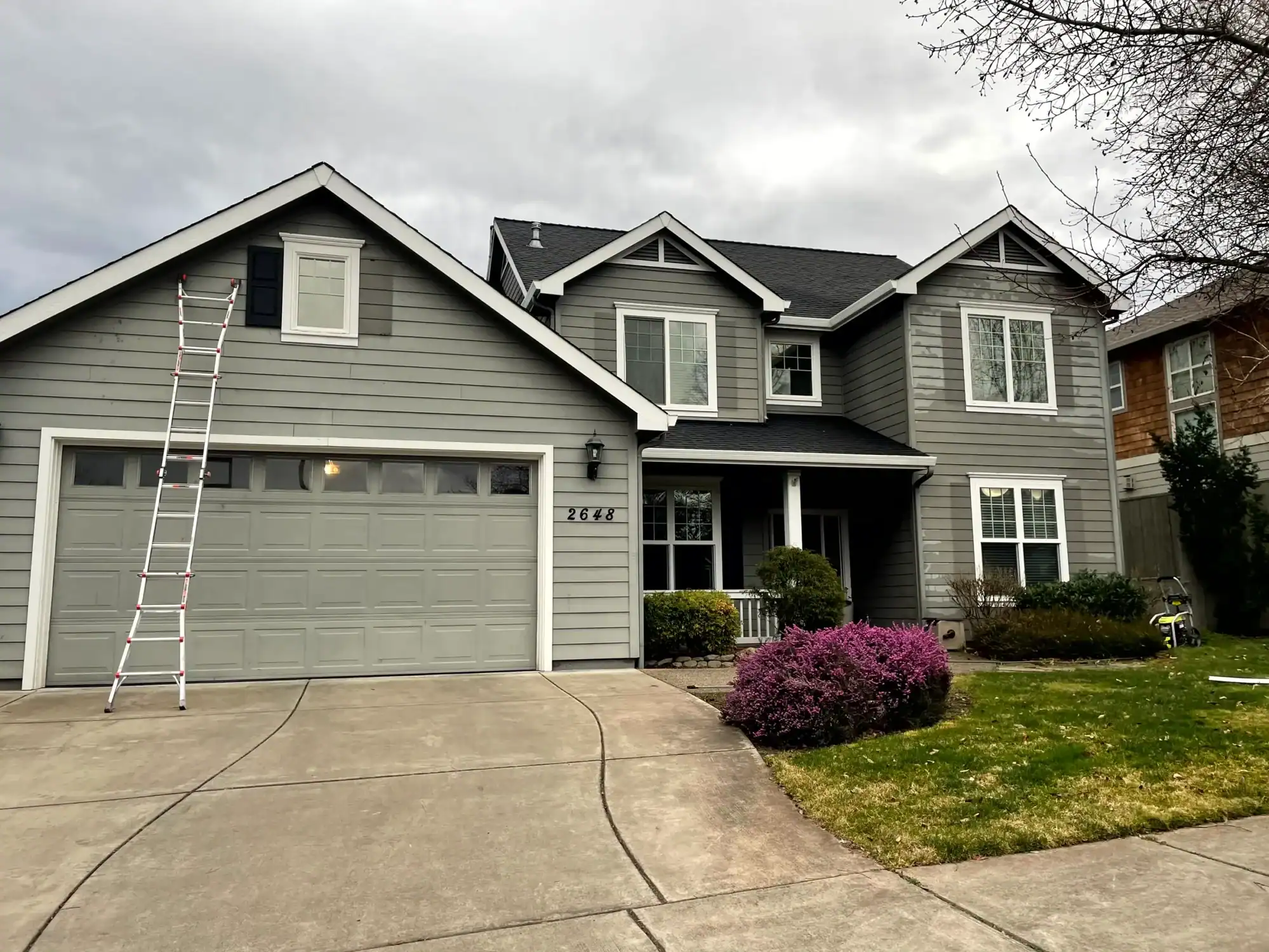
Why a Lower Bid Deserves a Closer Look
A lower estimate is not proof that a contractor plans to skip preparation. A company may have lower overhead, an opening in its schedule, or a different production process.
The concern starts when the lower proposal leaves out work included in the others. Compare washing, drying time, scraping, sanding, caulking, repairs, primer, coats, and cleanup. A price comparison without a scope comparison does not tell you which offer provides better value.
Preparation takes labor and materials. When those steps are missing or described only as “basic prep,” ask the contractor to explain exactly what will happen before paint is applied.
Our guide to what affects exterior painting costs explains how surface condition and prep needs can change the final price.
What Skipped Prep Does to Exterior Paint
Paint does not repair the surface beneath it. If siding is dirty, chalky, damp, glossy, or covered with loose coating, the new layer may bond to that weak material instead of the siding itself.
That can leave the finish looking acceptable at first. Problems often become visible after the exterior goes through sun, seasonal moisture, and temperature changes. Peeling, cracking, blistering, and lifting edges can follow when adhesion is weak or water remains behind the coating.
The Rogue Valley brings strong summer sun, wet periods, and changing temperatures. A coating system needs a stable surface beneath it to handle those conditions.
Exterior Prep Steps That Protect the Finish
Not every home needs the same amount of preparation. The correct scope depends on the existing coating, siding material, moisture conditions, repairs, and areas of bare substrate.
A complete inspection should determine which of these steps apply:
The EPA guidance on cleaning and drying surfaces before painting warns that paint applied over moldy surfaces is likely to peel. The same section advises cleaning the growth and drying the surface before coating it.
Warning Signs of Early Exterior Paint Failure
Prep-related problems do not always appear as soon as the project is finished. Watch for bubbling, blistering, lifting edges, flaking, cracking, chalky residue, discoloration, or recurring damp areas.
The location of the failure can offer clues, but it is not a complete diagnosis. Peeling around windows or trim may point to water entry, failed sealant, or movement. Widespread peeling may come from loose old coating, contamination, moisture, or an incompatible coating system.
Large sheets of peeling paint often show that one layer has separated from another. The cause should be found before the area is scraped and repainted, or the same problem may return.
Why Corrective Repainting Can Cost More
Fixing failed exterior paint usually involves more than adding another coat. Loose material must be removed, edges may need sanding, damaged surfaces must be repaired, and the underlying cause has to be corrected before primer and finish coats are applied.
That added removal and repair work can make the second project more involved than the original scope should have been. The final price depends on the size of the affected area, access, siding condition, moisture damage, repairs, and coating system.
A lower initial price can still be a good value when the scope is complete. The goal is not to choose the highest estimate. It is to understand what each contractor is including and what may be left for later.
Questions to Ask Before Approving an Exterior Project
Ask each contractor the same questions so you can compare the work instead of comparing price alone:
Our article on how to choose a painting contractor covers more questions that can help you compare companies before making a decision.
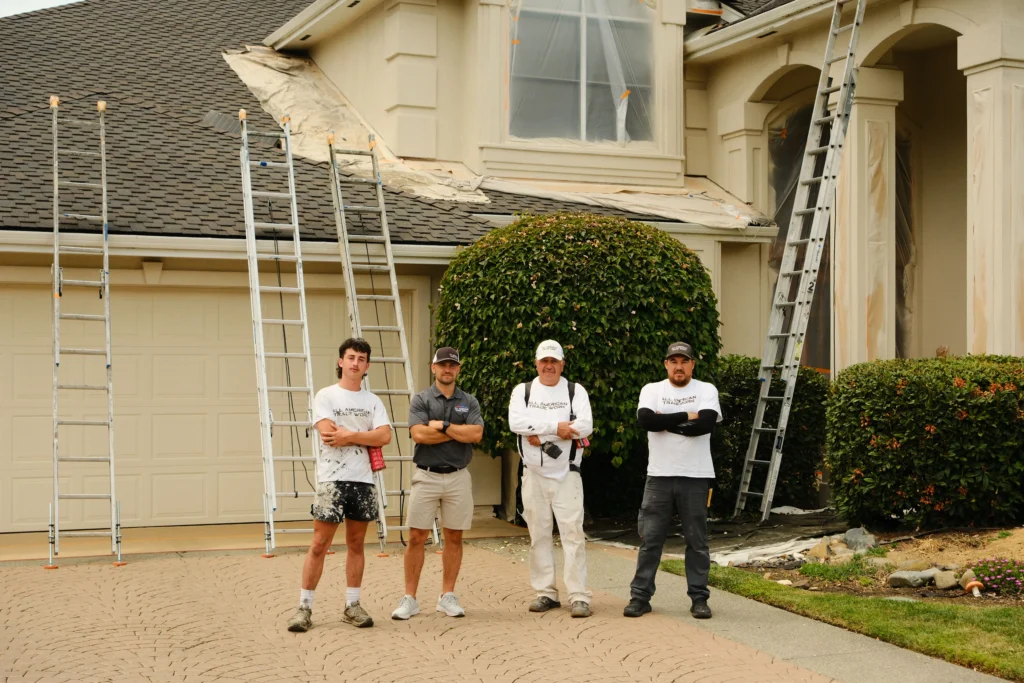
How All American Trade Work Handles Exterior Prep
All American Trade Work includes pressure washing, a surface repair evaluation, and full masking before exterior paint is applied. The condition of the siding, trim, doors, gutters, handrails, brick, or stucco determines the additional preparation included in the project.
Each approved project is assigned a project manager who confirms colors, scheduling, and the work plan. The proposal names the surfaces, products, and number of coats so the scope is clear before work begins.
All American Trade Work uses Sherwin-Williams Duration Exterior for residential exterior projects. Product choice still depends on correct preparation and application. Paint cannot make up for loose coating, trapped moisture, damaged siding, or a contaminated surface.
Every exterior project includes a final walkthrough and a one-year warranty on labor and materials. You can also read about the factors that affect how long exterior paint can last.
Frequently Asked Questions About Exterior Paint Prep
Does every exterior need pressure washing before painting?
Most exteriors need some form of cleaning, but the method should match the siding and its condition. Excessive pressure can damage wood, stucco, and other surfaces. The goal is to remove contamination without harming the substrate.
Does every surface need primer?
No. Primer is commonly needed on bare substrate, repairs, stains, exposed wood, and surfaces that require help with adhesion. Sound existing coatings may not need full priming when the selected paint system allows spot priming.
Can exterior paint be applied over mildew?
Mildew should be cleaned and the surface should be allowed to dry before painting. Coating over active growth can lead to poor adhesion and recurring stains.
Why does paint peel around windows and trim?
Common causes include water entry, failed caulking, loose old paint, movement, or moisture coming from behind the surface. The source should be corrected before repainting.
How can I compare exterior painting estimates?
Compare the surfaces, preparation, repairs, products, coats, cleanup, schedule, and warranty. A total price without those details does not show which contractor is offering the stronger scope.
Ready to Review Your Exterior Painting Scope?
If you are comparing exterior painting estimates in Medford, Central Point, Jacksonville, Ashland, or a nearby Rogue Valley community, All American Trade Work can inspect the exterior and explain the preparation your home needs.
Your estimate will cover the surfaces, prep steps, products, coats, project process, and warranty before work begins. Schedule your free consultation today. When you are ready, contact All American Trade Work at 541-697-3141.